How Quickly Should Hazardous Trees and Branches Be Removed After Storm Damage
Hazardous trees and broken branches posing immediate threats to structures, utility lines, or pathways require containment or removal within 2 to 24 hours post-storm. Secondary canopy hazards like cracked limbs or suspended "hangers" should be professionally evaluated and cleared within 24 to 72 hours. General debris management and routine post-storm tree health checks can be safely completed within 3 to 7 days once immediate hazards are secured.
Key Indicators of Hidden Tree Damage
Not all post-storm structural failures are obvious from ground level. Arborists evaluate specific indicators to identify active failure risks before limbs drop:
1. Trunk Splitting and Longitudinal Union Cracks
Vertical, diagonal, or V-shaped fractures along the main stem or major branch scaffold crotches indicate severe structural wood shear. When high winds flex a tree's crown beyond its elastic threshold, internal heartwood fibers snap, permanently compromising the tree's load-bearing capacity. These fissures are particularly insidious because they rarely heal naturally; instead, shifting wind vectors, ambient temperature swings, and the sheer weight of overhead foliage cause cracks to widen over time. What appears as a hairline fracture immediately following a storm can rapidly convert into a catastrophic trunk failure without warning.
2. Suspended "Widowmaker" Branches and Intercepted Canopy Debris
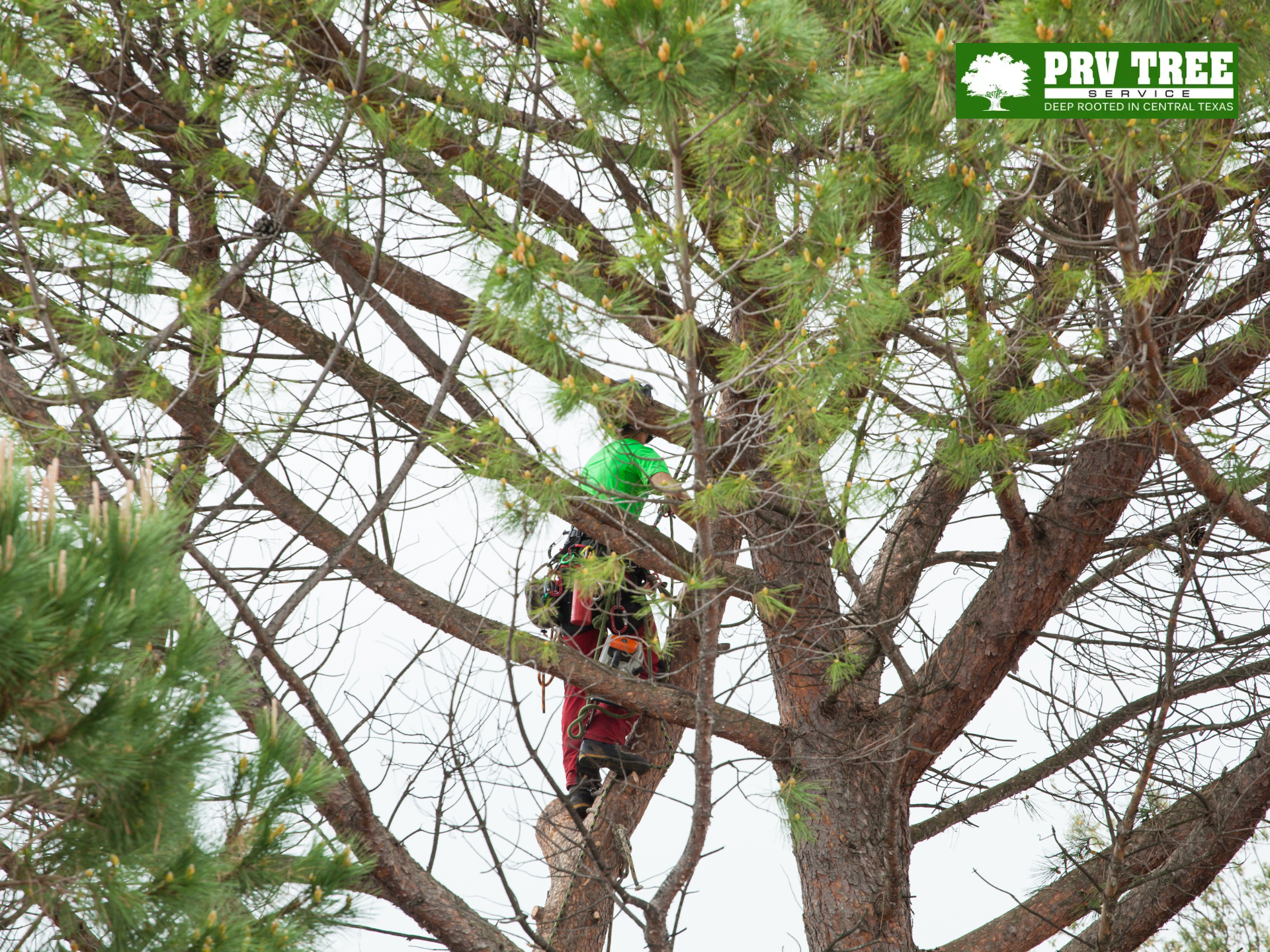
Severed, heavy limbs that remain entangled in upper canopy foliage pose an extreme, unpredictable threat to anything below. Referred to in arboriculture as "widowmakers," these detached branches no longer have structural attachment points to the tree. They hang in precarious equilibrium, held temporarily by small twigs, bark friction, or neighboring foliage. As the leaves dry out, contract, and lose tension or as light breezes reorient the canopy, the balance point shifts suddenly. This sends hundreds of pounds of deadweight crashing directly into target zones like pathways, driveways, roofs, or outdoor living spaces.
3. Root Shear, Soil Heaving, and Structural Anchoring Loss
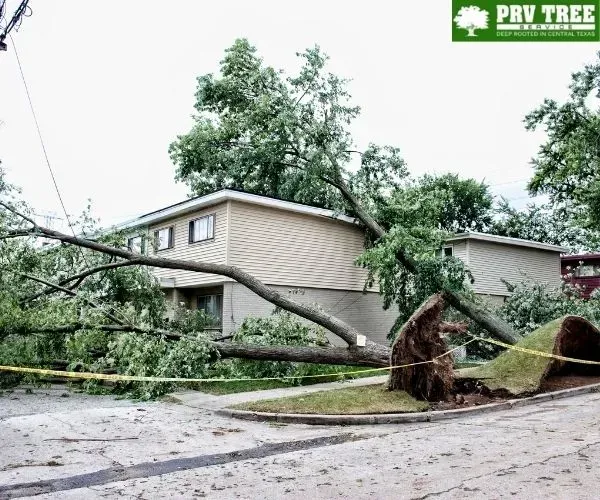
When severe, prolonged rainfall saturates the ground, the soil loses its cohesive strength just as high-velocity winds place maximum lateral force on the upper crown. This dynamic creates a lever effect that shears fine feeder roots and fractures major structural anchor roots underground. Key indicators of root plate failure include fresh cracks in surrounding turf, lifted or "heaved" soil mounds on the windward side of the trunk, exposed root mats, or a noticeable fresh lean in the stem. Because a compromised root plate can no longer support the tree's total mass, these specimens represent active fall hazards requiring immediate mechanical stabilization or removal.
Heavy hardwood canopies, particularly on properties dealing with severe
storm damage in Austin, TX, carry significant water weight during rainstorms, rapidly accelerating stress on compromised limb unions.
Risks of Delaying Hazardous Tree Cleanups
Leaving damaged trees untreated creates compound risks that increase overall repair costs and liability:
- Accelerated Wood Decay: Fresh tear wounds allow fungal pathogens and wood-boring insects to penetrate internal heartwood, weakening the tree further within days.
- Unpredictable Target Impact: Suspended limbs fall without warning, risking injury to pedestrians or damage to parked vehicles, fencing, and roofs.
- Insurance Complications: Insurers expect prompt action to mitigate secondary property loss; unaddressed hazards may compromise claim resolutions.
Furthermore, property owners recovering from severe storm damage in Austin must manage local oak wilt precautions, making clean, professional pruning cuts critical to preventing disease infection through fresh storm wounds.
Professional Arborist Capabilities and Service Standards
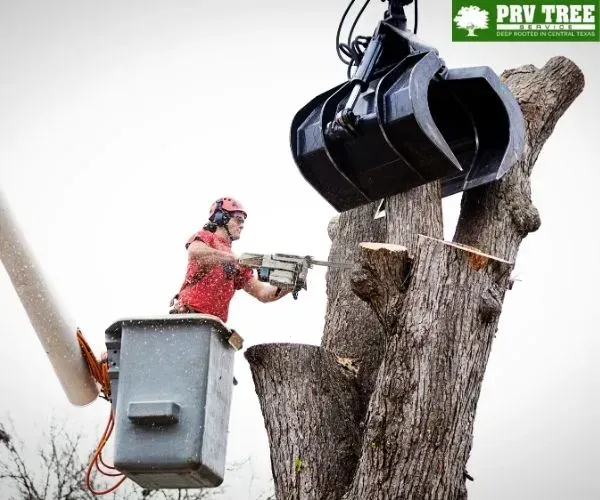
Safely removing storm-damaged trees requires specialized rigging, high-capacity machinery, and deep arboricultural expertise. Property owners need clear expectations and proven standards when selecting recovery professionals.
Our professional arborists have years of experience and are dedicated to providing exceptional tree care for homes and businesses. We ensure that your trees will stay healthy and beautiful, rest assured that our products are of the highest quality and will serve you well, to assist you in making well-informed choices regarding your trees, our knowledgeable staff exists round-the-clock to respond to inquiries and provide guidance.
Whether navigating tight residential lots or clearing commercial sites following severe Austin storm damage, maintaining strict safety protocols protects structures and preserves surrounding landscape investments.
Immediate Post-Storm Action Plan
Follow this checklist immediately after storm weather clears to protect your family and property:
- Establish a Safe Clearance Zone: Keep occupants, vehicles, and pets away from compromised trees and hanging canopy branches.
- Maintain Distance from Utility Lines: Treat all lines as energized. Never attempt DIY trimming near wires, notify utility providers immediately.
- Photograph Damage for Records: Capture high-resolution images of structural damage, fallen limbs, and tree proximity before starting cleanup.
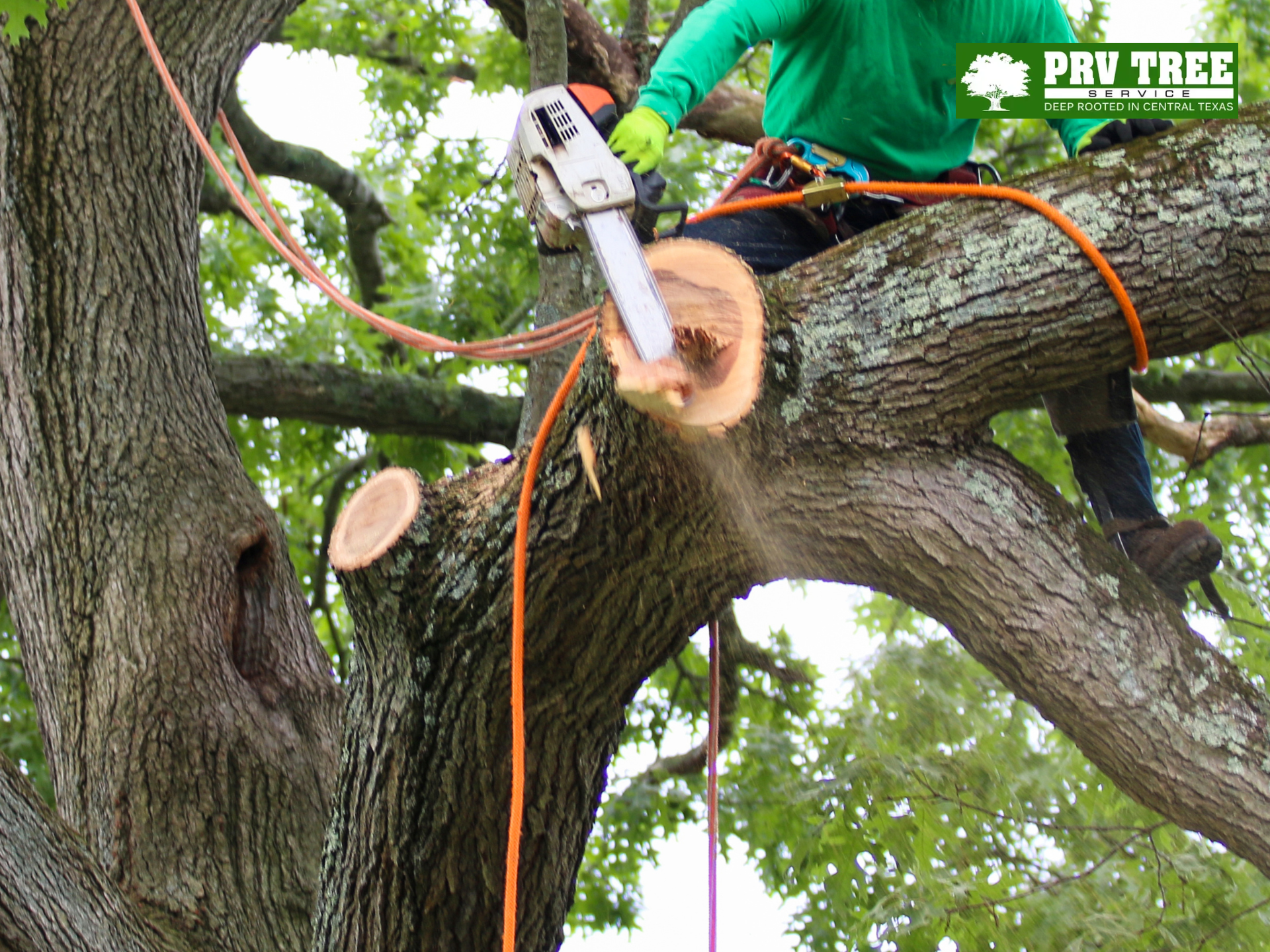
- Engage Fully Insured Arborists: Request certified professionals equipped with crane rigging, heavy saws, and proper safety gear.
People Also Ask
Can a storm-damaged tree be saved instead of removed?
A tree can often be preserved if it retains over 50% of its healthy crown, has an intact main trunk, and shows no root plate movement. A certified arborist can install cabling or perform structural pruning to assist recovery.
Who pays if a neighbor's storm-damaged tree falls on my property?
Standard property insurance generally covers damage on your land caused by a neighbor's tree due to weather events. However, if the tree was documented as dead or hazardous prior to the storm, the tree owner may be held liable.
Is tree removal near power lines safe for homeowners?
No. Any tree work within 10 feet of power lines should only be handled by EHAP-certified utility line clearance specialists due to extreme electrocution hazards.
Does homeowners insurance cover post-storm tree cleanup?
Insurance typically covers removal costs if a fallen tree damages a covered structure (house, garage, fence) or blocks a driveway. Trees falling harmlessly in open yard space are usually not covered.
Restore Safety & Peace of Mind with PRV Tree Service
When severe weather threatens your property, trust PRV Tree Service for rapid, reliable, and safety-focused arborist care. Our fully insured team provides expert storm recovery, precise limb removal, and comprehensive landscape assessments for homes and businesses across Austin, TX.
Protect your home and landscape today with trusted local experts.
Contact us today!